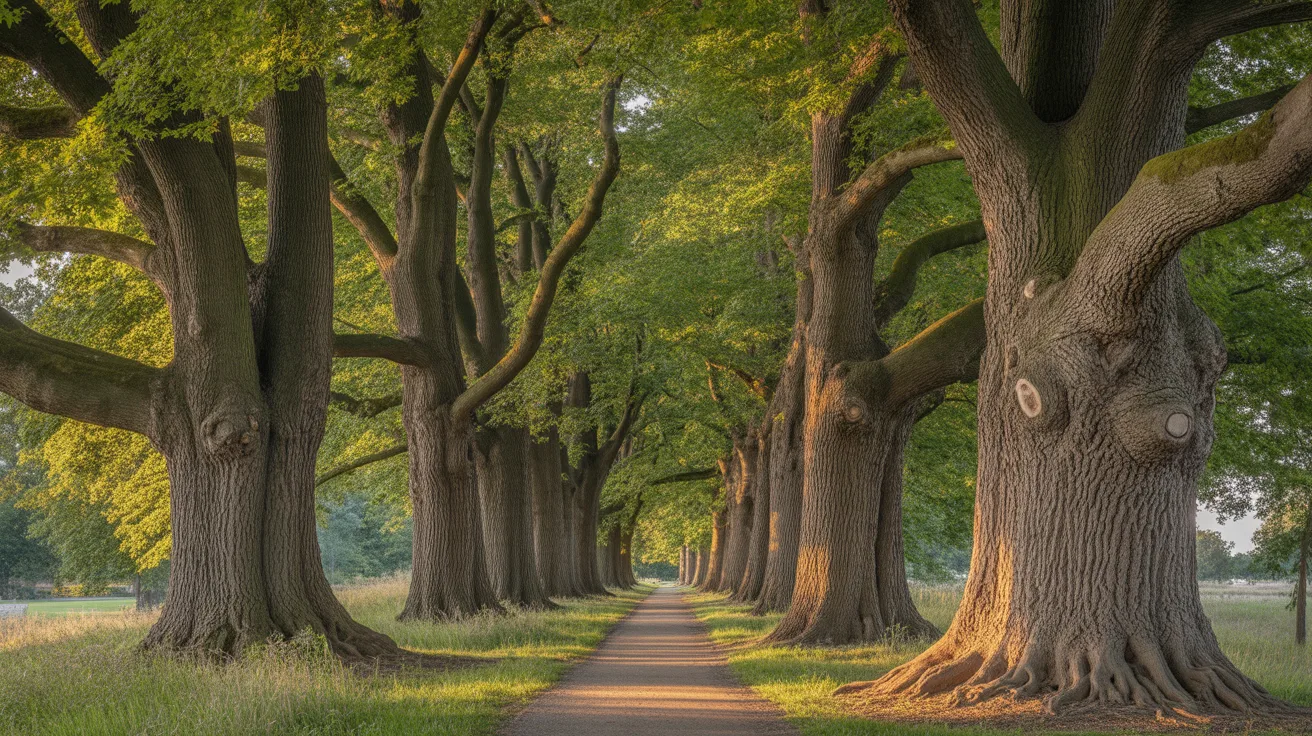
I thought that when I first searched lewis center ohio champion trees it was just a list of botanists niche. Something technical, perhaps even boring. However, having plowed through the checked records and the local observations a few weeks, I changed my mind entirely.
It was not merely a list of large trees, what I discovered, but a silent narrative of age, conservation, and how little people notice some of the most remarkable natural features. These are not tourist sites with signs and fences. Majority of the people pass by them without knowing what they are.
Wonder what champion trees there are in Lewis Center? Here is the straight truth:
They are spectacular–yet simple to overlook.
Information is more important than looks.
The experience is not dramatic, but subtle.
It is not a sightseeing checklist, it is more of a gradual discovery.
What Happened When I Dug Into Champion Tree Records in 30 Days.
I began this because I was curious. I had heard of the Ohio champion trees registry, and Lewis Center continued to be mentioned in the conversation about Delaware County. Thus, I took approximately one month to cross-check listings, measurement standards, and real-world mentions.
Initially, it was disorienting. Champion trees do not simply mean big trees. They are calculated by a formula-trunk circumference, height and crown spread all are put into a point system. That is that a tree that appears huge may not be eligible, and another less noticeable one will be rated higher.
Patterns began to develop over time. Most of the prominent trees of the Delaware County Ohio are hidden in the parks, old homes, or conserved areas. They are not marked distinctly. Indeed, some of the confirmed guests stated that they had passed by them without noticing.
A single quantifiable lesson: in the records I went through, most champion-level trees had a total of over 150-200 points, which is the standard threshold in systems based on American Forests. That provided me with a tangible means of knowing what it means by champion.
The Trade-Offs that No one Talks about (But You Experience at Once)
Advantage (What Worked)
Disadvantage (What Frustrated)
My Honest Take
Unique natural landmarks
Hard to locate
Worth it if you’re patient
Real ecological value
No clear signage
Not beginner-friendly
Data-backed rankings
Not visually obvious always
Requires context
Quiet, uncrowded spots
Limited public awareness
Feels hidden
Among them is the fact that these places are very peaceful. Ohio big tree sites do not receive crowds as compared to normal attractions. That makes the experience more personal- but also more difficult to get to when you are not sure where to go.
The absence of signage, on the other hand, is a factual problem. Several confirmed accounts state that they used GPS positioning or local tips. You won’t find much to do but be disappointed in case you expect marked trails or information boards.
Why People Continue to Search Them Out.
Rare tree sizes
Local ecological history
Quiet outdoor exploration
Personal discovery feel
Where Lewis Center Ohio Champion Trees Fail (And Why That Matters)
The greatest myth I had as a young person? I imagined that these trees would be grand in a conspicuous manner. As though it were something you would tell at a glance.
However, that is not the case.
Most of the native Ohio trees are large in size with time thus unless you are knowledgeable in measurements you may not notice what makes a tree a champion. It does not necessarily have to be height but the aggregate measurements.
Accessibility is another misconception. Champion trees are not necessarily in the parks. Others are located on private property or semi-accessible locations. That transforms the viewing to searching.
My Current “Workflow” to Find and Learn These Trees.
Had I been actively researching Lewis Center Ohio champion trees, this is how I would approach it based on all that I have learned:
I would begin with registry data, particularly listings that are in the style of American Forests-style scoring. Then I would overlay some coordinates with Google Maps and compare the parks or green spaces around.
I would schedule the visits during the daylight, preferably on weekends and spend 1-2 hours at each place. Free but I would consider traveling time and parking availability.
Above all, I would carry context, information about tree species, anticipated measurements, and registries photos. Otherwise, you can forget what you are standing next to.
Who This Is NOT For.
This is unlikely to impress you in case you are expecting a visual spectacle, say a well-known landmark. Champion trees are not meant to be fast hitting. They need patience and inquisitiveness.
Nor is it the best when you want to have more organized outdoor activities. No guided tours, no obvious paths, and minimal signs. Unless you like solving problems by yourself, this can be frustrating quickly.
Questions People Ask.
What makes a champion tree in Ohio?
A champion tree is rated through a point system that incorporates the trunk circumference, height and the spread of the crown. The tree of a species that scores the most in a region is given the title. It is not a matter of size, but proportions.
Where are champion trees in Lewis Center Ohio?
They are usually found in parks, conserved land or old properties in the Delaware County. Precise positions may need to be verified by checking registries or local sources as there is little signage.
How do champion trees work?
Measurements are taken of trunk circumference (typically at 4.5 feet high), total height, and average crown spread. These values are summed up through a standard formula to come up with ranking points.
Who will nominate a champion tree?
Yes, in most cases. Citizens may report measurements to local or national registries, but they have to be verified. This maintains the data to be accurate and standardized.
Do the law protect champion trees?
Not always. Others are safeguarded when they are in parks or conservation areas, but those on privately held land might not be formally safeguarded. It is based on place and possession.
Which species are typical of the Ohio champion trees?
You will come across such species as oak, sycamore, and maple. These naturally become huge and long-lived, so they are good champions in waiting.
Conclusion – The One Thing To Remember.
The exploration of lewis center ohio champion trees altered my thoughts about hidden landmarks. They are not the spots where you go to have a quick wow experience, but where you enjoy after you know what you are looking at.